Shift 01 / Commercial cleaning, Orleans
Cleaned on a schedule you can set your watch by.
Commercial cleaning for Orleans offices, clinics, shops and industrial units.
01 / Positioning
A routine that holds, week after week.
1 / Routine
Commercial cleaning works when the same person follows the same written list, in the same order, on a schedule that does not move. Nothing about it should depend on someone remembering.
2 / Checklists
Every space is walked first, then written down room by room with a frequency beside each task. The checklist is what we clean to, and what we check the work against.
3 / Ready each morning
Floors done, washrooms restocked, waste out, entry glass clear. The building is ready before your first staff member arrives, and it looks the same on a Tuesday as it does on a Monday.
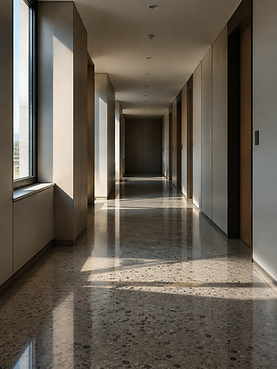
Inspection record / corridor, second floor
02 / Services
Eight services, each with its own written scope.
- 01Office cleaningDesks, meeting rooms, kitchens and washrooms, cleaned after hours on a fixed weekly or daily list.
- 02Janitorial servicesThe routine work that keeps a building steady: waste, floors, surfaces, washrooms and restocking.
- 03Medical and dental office cleaningWaiting rooms, reception, offices and washrooms, cleaned around your clinical protocols.
- 04Retail and restaurant cleaningFront of house, floors and washrooms ready before opening, with kitchen work only as agreed.
- 05Post-construction cleaningDust, film and debris removed in stages so a finished space can be handed over or occupied.
- 06Floor careStrip and wax, buffing and carpet extraction, scheduled around your trading hours.
- 07Window cleaningInterior glass and ground-level exterior glass, including frames, sills and entrance doors.
- 08Day porter serviceA presence during opening hours for lobbies, washrooms, waste and the small things that build up.
A clean building is not an event. It is a routine that holds.
03 / How a cleaning plan works
Written first, then cleaned.
A plan starts with a walkthrough. We look at the rooms, the floor materials, how many people pass through, where waste collects, which doors are used, and what time the building empties. That visit is the only honest way to size the work.
From it we write a scope: each area, the tasks in that area, and how often each task is done. Daily items read differently from weekly and monthly items, and the written scope keeps that difference clear. Frequency is part of the document, not a verbal arrangement that drifts.
Access comes next. Keys, fobs, alarm codes and lighting are handled by agreement, recorded, and returned when an arrangement ends. After-hours work only functions when entry and exit are settled the week before, not the night of.
Supplies and equipment belong to the plan. If your workplace requires certain products, or needs to keep its own stock, that sits in the scope in the same place as the tasks.
Communication is deliberately plain. One email thread, written notes for changes, and a review at the intervals you choose. If a room was skipped, we want to hear it the next morning, while it can still be corrected the same week.
04 / Our process
Four steps from first visit to ongoing service.
Step 01
Walkthrough
We visit the space at a time that suits you, look at each area and ask how the building is used through the day.
Step 02
Written scope and schedule
You receive the areas, tasks and frequencies in writing, with access arrangements and the hours we would work.
Step 03
First clean and review
The first clean follows the scope. We review it with you soon after, while the details are still fresh.
Step 04
Ongoing service
The schedule continues, the checklist stays the same, and changes are made in writing as your space changes.
05 / Ottawa seasons
This climate writes half the checklist.

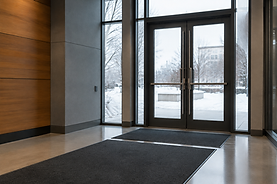
- Winter: salt and grit are walked in at every entrance, so mats are changed and floors are damp mopped at the door before the traffic arrives.
- Winter: hard floors near entrances are cleaned more often than the rest of the building, and mats are lifted so salt does not sit underneath.
- Spring: grit and sand collect in corners, along baseboards and in stair treads, which is when a slower detail clean pays for itself.
- Post-construction dust settles for weeks after a renovation, so horizontal surfaces and vents are added to the list, not treated as a one-time event.
- Fall and winter daylight is low, so glass, chrome and polished floors show marks sooner and need the same attention inside as the entrance does.
None of this changes the shape of a plan. It changes the frequency of a few tasks and the time of year we schedule floor work. Both are written down.
06 / Service areas
Commercial cleaning across Orleans and east Ottawa.
07 / FAQ
Questions we are asked before a walkthrough.
08 / Start a cleaning plan
Start a cleaning plan
Tell us the address area, the hours you keep and the rooms that matter most. We reply by email with the next step, usually a walkthrough.
Prefer to write it out? Email info@commercialcleaningorleans.com.